








Discover the untold story of Frisbie Dawson, Adam West’s first wife and Cook Islander dancer. Explore her Polynesian heritage, biography, children Jonelle and Hunter, and lasting legacy. Fully researched 2026 guide.
Frisbie Dawson: Adam West’s Cook Islander Wife, Life Story & Legacy
Some stories deserve more than a footnote. Frisbie Dawson — full name Ngatokoruaimatauaia Frisbie Dawson — is one of them. Born on a remote coral atoll in the South Pacific and later married to the man who would become one of television’s most iconic superheroes, her life was a quiet masterpiece of cultural pride, resilience, and grace. While the world remembers Adam West as Batman, very few know the woman who stood beside him long before the cape and cowl changed everything.
Quick Facts: Frisbie Dawson at a Glance
| Detail | Information |
|---|---|
| Full Name | Ngatokoruaimatauaia Frisbie Dawson |
| Known As | Nga / Frisbie Dawson |
| Date of Birth | January 30, 1937 |
| Place of Birth | Pukapuka, Cook Islands |
| Nationality | Cook Islander / American |
| Ethnicity | Polynesian (Cook Islander) |
| Father | Robert Dean Frisbie (American writer) |
| Mother | Ngatokorua-A-Mataa (Polynesian princess of Pukapuka) |
| Sister | Florence “Johnny” Frisbie (author) |
| Spouse | Adam West (m. 1957–1962) |
| Children | Jonelle Anderson West, Hunter Anderson West |
| Later Name | Nga F. Smith (after remarriage) |
| Profession | Cook Islands dancer, cultural performer |
| Date of Death | March 31, 2006 |
| Place of Death | Hawaii, USA |
| Age at Death | 69 |
Frisbie Dawson Biography: Born Between Two Worlds
To understand Frisbie Dawson, you have to start with Pukapuka — one of the most isolated coral atolls in the entire South Pacific. This is where she was born on January 30, 1937, into a family that was already extraordinary before she took her first breath.
Her father, Robert Dean Frisbie, was an American travel writer from Ohio who had traveled to the South Pacific on doctor’s advice in 1920 and never truly left. He eventually settled in the Cook Islands, where he met and married a Polynesian woman named Ngatokorua-A-Mataa, described in historical records as a princess of Pukapuka. Their union produced several children, including Nga — a girl who would grow up carrying the weight and beauty of two very different cultural worlds.
Robert Dean Frisbie’s best-known work, The Book of Puka-Puka (1929), remains a landmark piece of Pacific literature. His writing gave the outside world a rare window into island life, long before the South Pacific became a travel destination. Frisbie Dawson grew up inside that story — not just reading it, but living it. She was raised on traditional Polynesian culture, island dance, oral storytelling, and the rhythms of a life tied closely to the sea.
That upbringing was not a disadvantage. It was her foundation.
Frisbie Dawson Cook Islander Heritage: Roots That Ran Deep
Pukapuka is no ordinary place. It is one of the most culturally preserved atolls in the Cook Islands — a group of small islands scattered across the South Pacific between Hawaii and New Zealand. The people of Pukapuka maintained a way of life largely untouched by Western influence well into the 20th century. Frisbie Dawson grew up immersed in this world.
Her mother’s lineage gave her direct ties to Polynesian royalty and tradition. Her father’s American background gave her access to literature, language, and a broader world view. Together, these two influences shaped a woman who could navigate between cultures with ease — and who never abandoned either one.
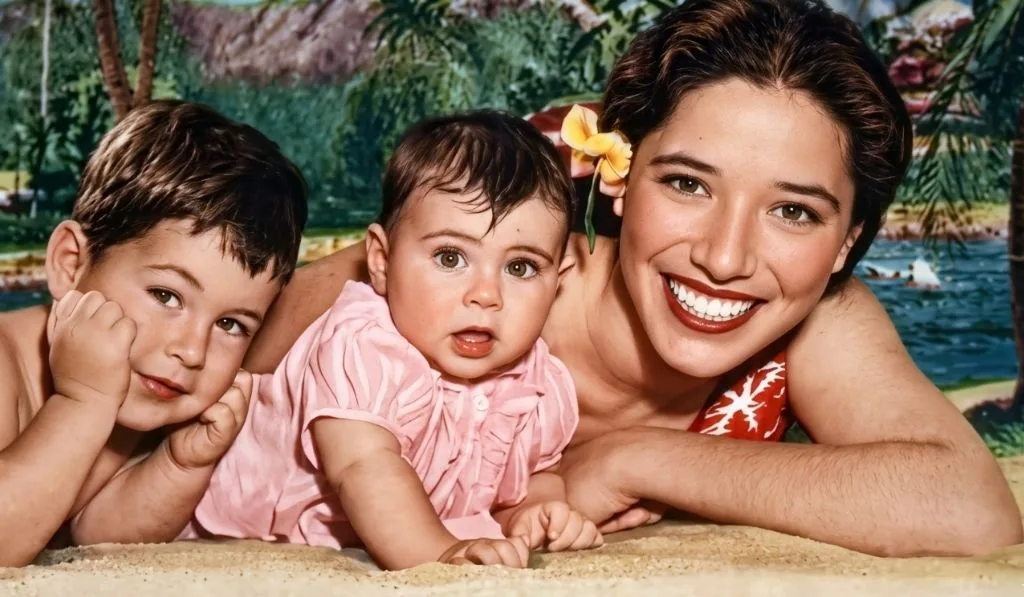
She became known as a skilled Cook Islands dancer. This was not a casual hobby. In Polynesian culture, dance is a form of historical record — a living archive of stories, rituals, and identity. To dance was to speak the language of her ancestors. That connection to Tahitian and Cook Islands dance would remain a core part of her identity for the rest of her life.
Her sister, Florence “Johnny” Frisbie, also inherited the family’s love of storytelling. Florence wrote her autobiography between the ages of 12 and 14, publishing it at 15 — a remarkable achievement that documented their unusual upbringing on remote Pacific islands. Florence later wrote The Frisbies of the South Seas as a tribute to their father. The Frisbie family, in many ways, were the literary ambassadors of the Cook Islands to the English-speaking world.
Adam West First Wife Frisbie Dawson: How They Met
Hawaii in the late 1950s was a place in transition. Moving toward statehood, it was becoming a cultural crossroads between mainland America and the Pacific Islands — a melting pot where very different lives could intersect.
Adam West — born William West Anderson in Washington State — had made his way to Hawaii to pursue his acting ambitions. He landed a role on a local television program called The Kini Popo Show, working alongside, of all things, a chimpanzee named Peaches. He was charming, ambitious, and years away from becoming a household name.
It was in this setting that he met Frisbie Dawson.
The attraction made sense. She was striking, culturally rich, and completely unlike anyone he had likely encountered before. He was energetic, driven, and full of the kind of confidence that comes with chasing a dream. Two different worlds collided, and what emerged was a genuine love story — one that bloomed far from studio lights and red carpets.
Their wedding took place on February 1, 1957, in one of the most picturesque settings imaginable: the outdoor lanai of the Queen’s Surf restaurant and nightclub, overlooking Kapiʻolani Park on the Diamond Head side of Waikiki. It was, by any measure, a beautiful beginning.
Frisbie Dawson Children: Jonelle and Hunter
Frisbie Dawson and Adam West wasted no time building a family. Their daughter, Jonelle Anderson West, was born later in 1957 — the same year they married. Their son, Hunter Anderson West, followed in 1958. Two children in two years, born into a family still finding its footing both professionally and personally.
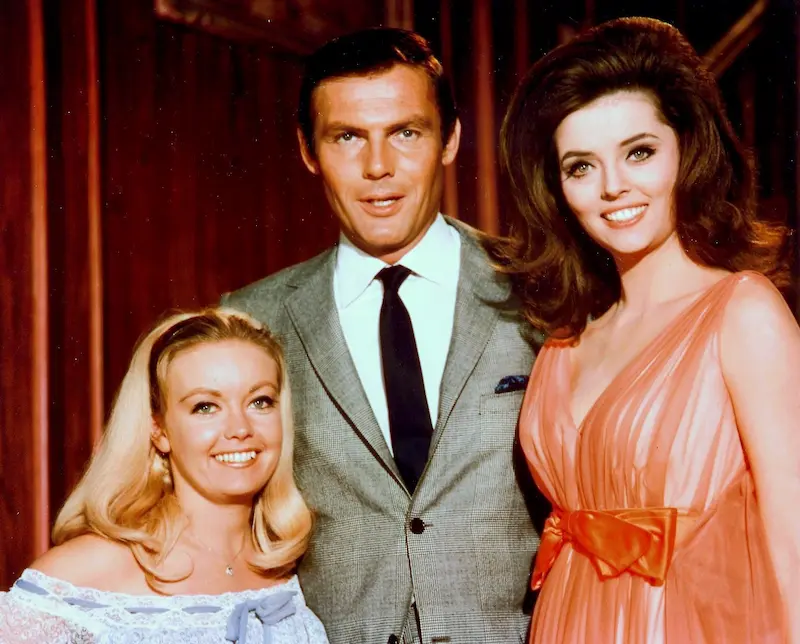
The young family initially remained in Hawaii while West continued working in local television. But as his ambitions grew, so did the pull toward Hollywood. By 1959, the family had relocated to the California film world — a move that represented a dramatic cultural shift for Frisbie.
She had grown up in one of the most remote places on earth. Now she was navigating Hollywood, a world built on image, performance, and relentless ambition. By most accounts, it was not her natural environment.
What mattered most to Frisbie, both during and after the marriage, was her children. Jonelle and Hunter were raised with love, cultural awareness, and a sense of identity that their mother worked hard to protect. She kept them away from the spotlight — a deliberate choice that reflected her own values. Fame, to Frisbie, was never the point.
More Read
Frisbie Dawson Family History: A Literary and Cultural Legacy
The Frisbie family story is bigger than any one person within it. Robert Dean Frisbie spent years documenting Pacific life through writing that combined personal memoir with ethnographic observation. His works introduced thousands of Western readers to a world they would never otherwise encounter.
His daughter Florence carried that torch forward. His daughter Nga carried it differently — through her body, through dance, through the quiet act of preserving culture in motion.
Florence “Johnny” Frisbie eventually married Carl Hebenstreit, who was reportedly a friend of Adam West’s — a small-world detail that adds yet another thread to this already intricate family web. The Frisbies were, in every sense, a family where art, culture, and geography intersected at every turn.
Frisbie Dawson was the living product of this extraordinary lineage. She was not simply Adam West’s wife. She was the daughter of a literary pioneer, the granddaughter of Polynesian royalty, the sister of a teenage memoirist, and a cultural keeper in her own right.
Life After Adam West: Choosing Authenticity Over Fame
By 1962, the marriage was over. Frisbie left Adam West that year — a decision that, given the social climate of the early 1960s and the pressures of Hollywood life, required real courage. West was beginning to gain momentum in his acting career. Batman was still four years away, but the trajectory was clear.
Frisbie did not follow it.
She returned to Hawaii, the place that had felt most like home — a bridge between the Pacific world she came from and the American world she had stepped into. She reconnected with Polynesian dance. She raised Jonelle and Hunter away from media attention. She rebuilt her life entirely on her own terms.
Later records refer to her as Nga F. Smith, suggesting she remarried at some point after her divorce from West — another chapter of her life lived quietly and privately.
When Batman became a cultural phenomenon in 1966, when Adam West’s face appeared on merchandise, lunchboxes, and television screens across America, Frisbie did not seek attention or trade on her connection to him. She simply continued living. That restraint, in a world that rewards self-promotion, says everything about her character.
Frisbie Dawson’s Legacy: More Than a Footnote
Frisbie Dawson passed away on March 31, 2006, in Hawaii. She was 69 years old. Her death was not covered widely. There were no press releases, no tributes from Hollywood. But the absence of noise does not indicate the absence of significance.
Her legacy operates on several levels at once.
She navigated an interracial marriage in the late 1950s — a time when such relationships faced genuine social resistance. She raised two children largely on her own after her divorce while maintaining her cultural identity. She preserved and practiced Cook Islands and Tahitian dance traditions long after she had every reason to abandon them for something more commercially viable.
She was the daughter of a man whose writing shaped how the English-speaking world understood the South Pacific. She passed that story — and that pride — on to her own children.
And she did all of it without ever asking for recognition.
The lives that leave the quietest marks are sometimes the most meaningful ones. Frisbie Dawson’s story does not need Hollywood’s validation. It stands on its own — rooted in Pukapuka, shaped by two cultures, and defined by a dignity that fame could never manufacture.